Give Your Engineering Team a Half Day to See What Good AI-Assisted Development Looks Like
Your team is already using AI coding tools. I run a hands-on workshop in your codebase, not a generic slide deck, so they leave with practices they can apply in the next sprint. It is also a safe way to evaluate AI's impact on team performance before a bigger commitment.
Book Your Workshop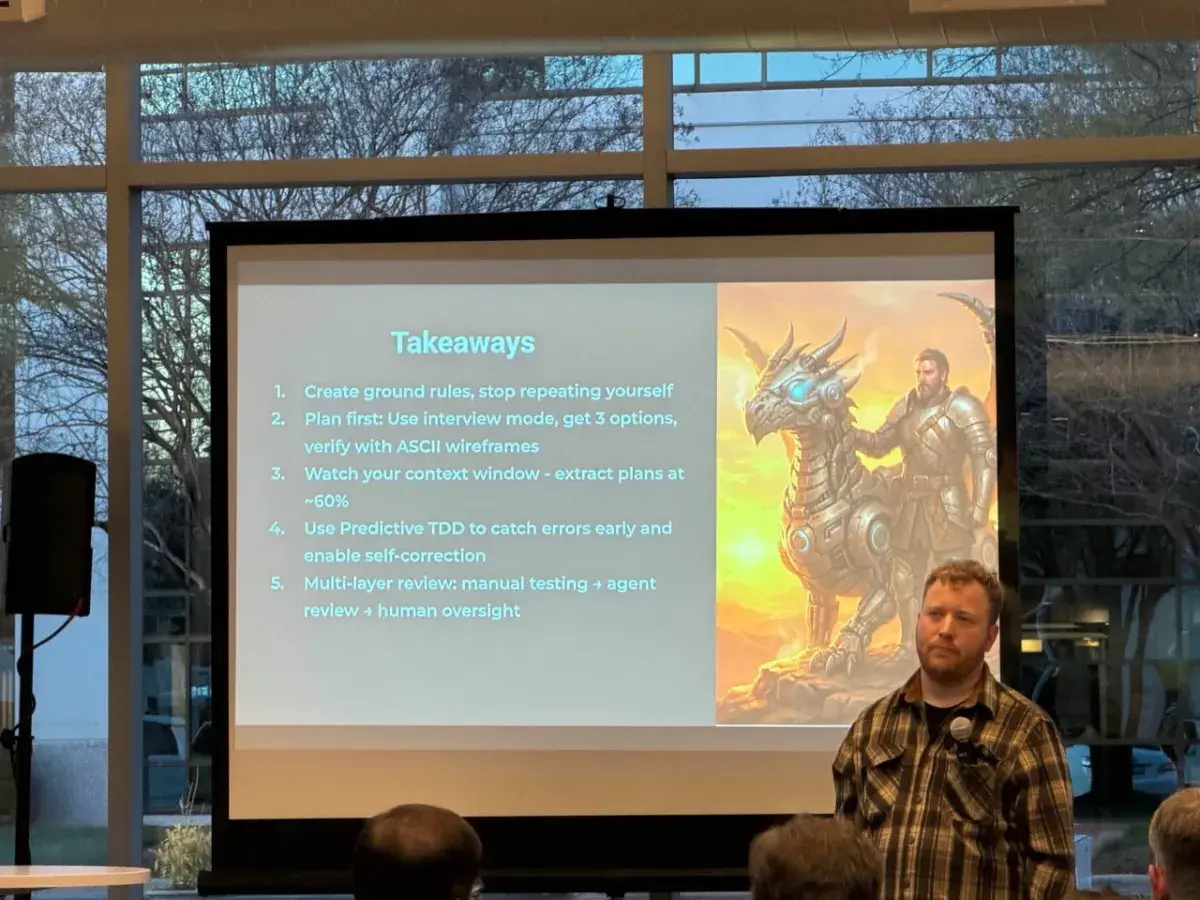
“I've been coding with AI assistance for a while now, and 'Taming the Dragon' solidified many workflows and concepts I've been stumbling across in my own development. Steven shared a clear workflow for coding with AI and covered a number of common failure modes to avoid as well.”
What's Included
- 60-minute live demo of effective AI coding practices in your tech stack
- 90-minute hands-on ensemble session working directly in your codebase
- 30-minute retro covering what worked and what to change next sprint
- Context engineering: what to show the agent, what to hide, when to intervene
- Code review practices tailored to AI-generated code
- Quick-win recommendations your team can apply immediately
Who This Is For
- You're using AI coding tools but aren't sure if the team is doing it well
- Code reviews of AI-generated code are getting messier instead of cleaner
- Leadership wants external validation before committing to a longer engagement
- You want a low-risk way to test working with me before a deeper engagement
Why This Works
I use these same practices in my own production work. Features that used to take me 1-2 weeks manually now ship in 1-2 days with coding agents, because I pair TDD, continuous refactoring, and small batches with the agent instead of just prompting it and hoping.
A team I coached on these fundamentals, refactoring, TDD, ensemble programming, went from constant rework to just two production defects in an entire year. The workshop is the fastest way to see whether your team is close to that or a long way off.
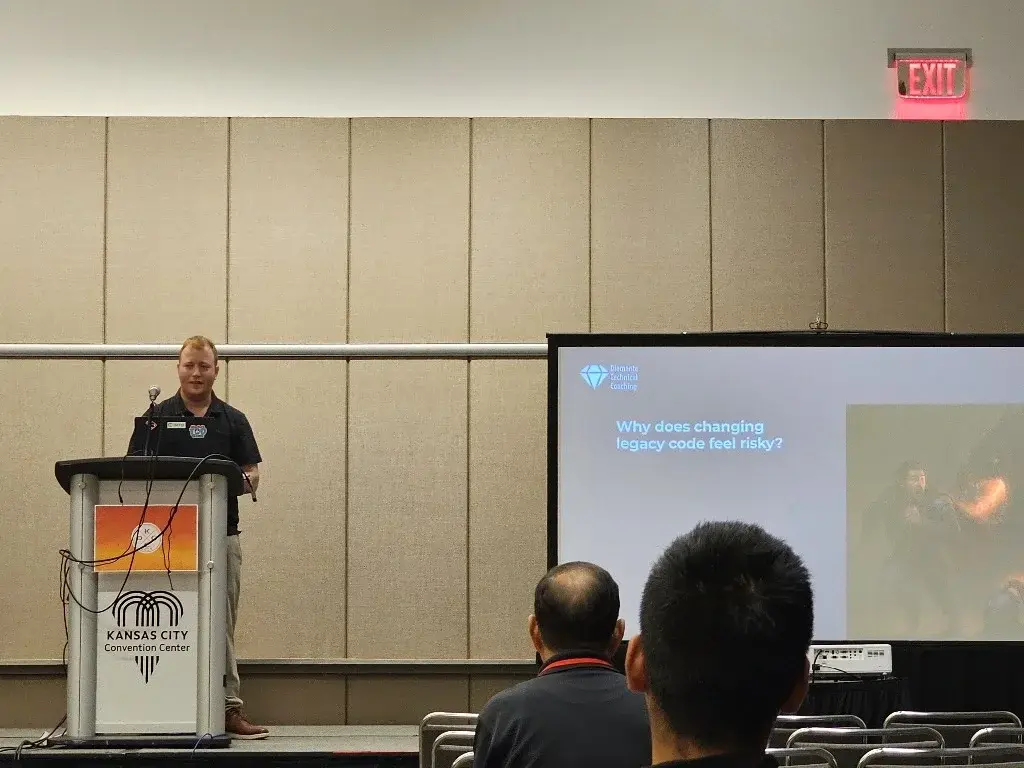
“Steven's structured coaching transformed how our team approached software development. His Learning Hours created a shared vocabulary and improved collaboration between consultants and client engineers, leading to stronger TDD adoption and a culture of continuous improvement.”

Common Questions
How much does it cost?
A private team workshop runs $4,500 to $12,000. The low end is a half-day for one team with lighter customization; the high end is a full day with more stakeholders, examples tailored to your actual codebase, and a leadership debrief afterward. Where you land depends on scope: team size, how much I tailor to your stack, and whether it's a half or full day.
How much time does this actually take?
It's a half-day: 3-4 hours with your team, plus about an hour of prep on my end reviewing your stack beforehand. I run a live demo, then we spend the bulk of the time working in your actual codebase, then close with a retro on what to do next.
Is this remote or on-site?
Either. Most workshops run remote over video with screen sharing, which works well since we're pairing on your code either way. I'm based in Raleigh, NC and can do on-site for local teams if that's a better fit.
How do you measure whether it worked?
The retro at the end captures what the team is walking away with: specific practices to change in the next sprint. I follow up afterward to see whether those changes stuck, and that's the real signal, not a satisfaction survey.
Who is this actually for?
Engineering teams already using AI coding agents like Claude Code or Cursor but unsure if they're doing it well: code reviews are getting messier, not cleaner, or velocity hasn't moved the way they expected. It's also a low-risk way for leadership to validate a team's practices before committing to a longer engagement.
What happens after the workshop?
You walk away with concrete recommendations regardless. If the team wants to go deeper, we talk about the 12-week transformation engagement, but there's no obligation, and no pitch buried in the retro.
My team is skeptical of 'workshops'. We've sat through plenty that changed nothing.
I hear that a lot, and it's usually a fair complaint about generic training. This isn't slides or toy examples. We work in your production codebase, on your real code, the entire time. By the end, the changes are already in your codebase and your team has a workflow they can keep using Monday morning, not slides that gather dust.
Ready to go beyond a single workshop? See how the 12-week team transformation engagement works.